
Las Vegas Hard Water and Your Countertops: What You Need to Know
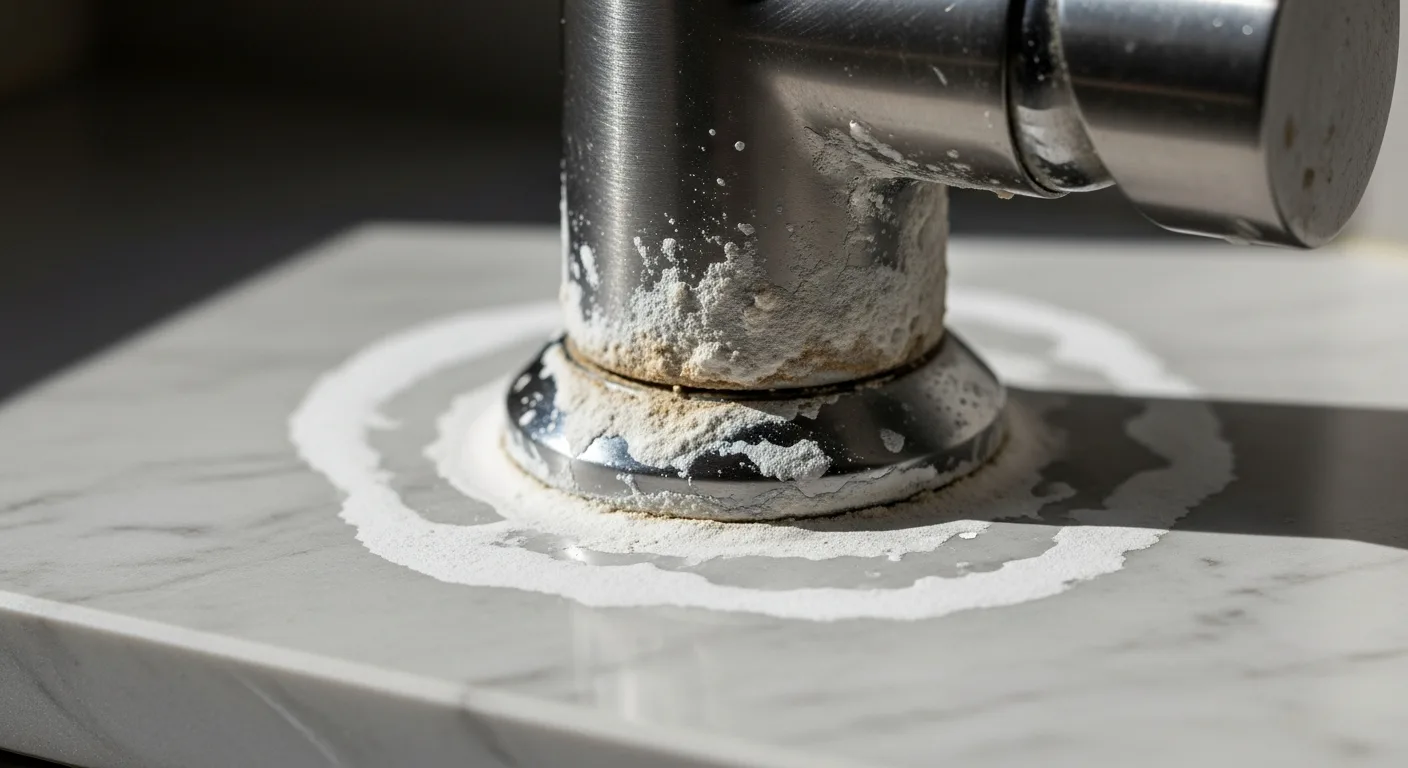
Image is illustrative.
Las Vegas has some of the hardest municipal water in America, and it directly affects your countertops. At 278 parts per million, the mineral content in our tap water leaves calcium and magnesium deposits on stone surfaces faster than almost anywhere else in the country. The material you choose and how you care for it determines whether your countertops stay beautiful or develop cloudy white buildup within months of installation.
At Night & Day Stone, we've fabricated and installed thousands of countertops across the Las Vegas valley over 20+ years. We see firsthand which materials hold up to our water and which ones struggle. This guide gives you everything we know about choosing, protecting, and maintaining countertops in Las Vegas hard water conditions.
Key Takeaways
- Las Vegas tap water measures 278 ppm hardness (sourced from Lake Mead), making mineral deposit buildup on countertops a daily reality
- Quartz and Porcelain handle hard water best because their non-porous surfaces prevent mineral penetration
- Marble is the most vulnerable material, with both etching and deposit issues compounding in hard water
- Proper sealing on natural stone creates a barrier that significantly reduces mineral absorption
- A whole-home water softener combined with daily wiping is the most effective long-term defense for any countertop material
Why Las Vegas Water Is So Hard
Every drop of water that comes through your Las Vegas tap originates from Lake Mead. As Colorado River water travels through hundreds of miles of limestone and mineral-rich rock formations, it picks up dissolved calcium and magnesium. By the time it reaches your kitchen faucet, the Las Vegas Valley Water District reports hardness levels around 278 parts per million.
For context, the Water Quality Association classifies anything above 180 ppm as "very hard." Las Vegas sits nearly 100 ppm above that threshold.
What does this mean for your countertops? Every time water sits on your surface, evaporates, or dries naturally, it leaves behind a thin film of mineral deposits. Over weeks and months, these deposits accumulate into visible white or cloudy spots, particularly around sinks, faucets, and anywhere water splashes regularly.
How Hard Water Affects Each Countertop Material
Not all countertop materials respond to hard water the same way. Here's what we've observed across thousands of Las Vegas installations.
Granite: Moderate Impact
Granite countertops handle Las Vegas hard water reasonably well. The stone's crystalline structure and proper sealing create a surface that resists mineral penetration. However, hard water deposits do build up on the surface, especially on darker Granite colors like Absolute Black or Steel Grey where white mineral spots show prominently.
What we see: Surface-level mineral deposits that wipe away with proper cleaning. On unsealed or poorly sealed Granite, minerals can penetrate the pores and become more difficult to remove over time.
Our recommendation: Seal every 12 months (rather than the typical 18-24 month schedule used in cities with softer water) and wipe surfaces dry after water contact near the sink area.
Marble: High Impact (Most Vulnerable)
Marble countertops face a double threat from Las Vegas hard water. Marble scores just 3-4 on the Mohs hardness scale and is composed primarily of calcium carbonate. Our hard water is slightly alkaline, and the combination of mineral deposits plus Marble's natural susceptibility to etching makes it the most challenging material for Las Vegas kitchens.
What we see: Mineral deposits accumulate faster on Marble than any other material. The deposits bond more aggressively to Marble's calcium-based surface. Around sink areas, we regularly see Marble that has developed a permanent hazy appearance within the first year when homeowners don't stay on top of maintenance.
Our recommendation: If you love Marble and choose it for your Las Vegas kitchen, commit to sealing every 6 months, wiping surfaces dry immediately after water contact, and using filtered water for any surface cleaning. Marble is stunning, but it requires dedication in our water conditions.
Quartzite: Moderate Impact
Quartzite countertops perform similarly to Granite against hard water. Quartzite is extremely hard (7 on the Mohs scale) and its dense structure resists mineral penetration when properly sealed. Hard water deposits sit on the surface rather than soaking in, making them easier to remove during routine cleaning.
What we see: Surface deposits comparable to Granite. Lighter Quartzite varieties like Taj Mahal and Super White show deposits less visibly than dark options. The stone itself suffers no damage from hard water exposure.
Our recommendation: Seal annually and incorporate a daily wipe-down around wet areas. Quartzite is an excellent choice for Las Vegas homeowners who want the look of Marble without the hard water vulnerability.
Quartz (Engineered): Minimal Impact
Quartz countertops are engineered from crushed quartz bound with resin, creating a completely non-porous surface. Hard water cannot penetrate the material at all. Deposits sit on top of the surface and wipe away easily with basic cleaning.
What we see: Minor surface deposits around sink areas that clean up with a damp cloth or mild cleaner. No staining, no penetration, no lasting damage. Quartz handles Las Vegas hard water better than any natural stone.
Our recommendation: Quartz requires no sealing and no special hard water precautions beyond routine cleaning. For Las Vegas homeowners who want zero hard water anxiety, Quartz is the lowest-maintenance option we fabricate.
Porcelain: Minimal Impact
Porcelain slab countertops are fired at extreme temperatures, creating a non-porous, glass-like surface. Like Quartz, hard water deposits cannot penetrate Porcelain. Any buildup sits on the surface and cleans away with minimal effort.
What we see: The easiest material to maintain in Las Vegas hard water conditions. Deposits wipe away instantly. The surface never dulls, stains, or shows mineral damage.
Our recommendation: Porcelain is virtually bulletproof against hard water. Combined with its UV resistance and heat tolerance, it's an outstanding material for Las Vegas kitchens and outdoor applications.
Hard Water Resistance Ranking: Best to Worst
Based on 20+ years of fabrication and follow-up with Las Vegas homeowners, here's how we rank countertop materials for hard water resistance:
| Rank | Material | Hard Water Impact | Maintenance Level |
|---|---|---|---|
| 1 | Porcelain | Minimal | Wipe and go |
| 2 | Quartz (Engineered) | Minimal | Wipe and go |
| 3 | Quartzite | Moderate | Annual seal + daily wipe |
| 4 | Granite | Moderate | Annual seal + daily wipe |
| 5 | Marble | High | 6-month seal + immediate dry |
Prevention: Stopping Hard Water Deposits Before They Start
The best approach to hard water buildup is preventing it from forming in the first place. These habits make the biggest difference in Las Vegas homes.
Wipe surfaces dry after water contact. This is the single most effective prevention method. When water evaporates naturally on your countertop, it leaves minerals behind. When you wipe it up before evaporation, nothing deposits. Keep a microfiber cloth near your kitchen sink and wipe down the surrounding countertop area after washing dishes or food prep.
Use filtered water for surface cleaning. When you spray tap water on your countertops to clean them, you're spreading 278 ppm mineral water across the entire surface. Fill a spray bottle with filtered or distilled water for daily countertop cleaning. Your surfaces stay cleaner longer.
Squeegee around sinks and faucets. The area within 12 inches of your sink takes the most hard water abuse. A small squeegee after heavy kitchen use keeps this zone deposit-free.
Fix drips immediately. A slow-dripping faucet deposits minerals 24 hours a day on the same spot. In Las Vegas, a leaking faucet can leave a visible mineral ring on natural stone within a week.
Last spring, one of our clients in Summerlin called frustrated about white spots forming on her new Granite countertops just three months after installation. When we visited, we found a barely noticeable leak from her soap dispenser that was dripping onto the stone behind the faucet. We tightened the connection, removed the deposits, and she hasn't had an issue since. Sometimes the fix is simpler than you think.
Removing Existing Hard Water Deposits
If you already have hard water buildup on your countertops, here's how to address it safely for each material.
On Granite and Quartzite
Mix equal parts white vinegar and water in a spray bottle. Spray the affected area, let it sit for 3-5 minutes, then wipe with a soft cloth. For stubborn deposits, use a dedicated stone-safe hard water remover (available at most home improvement stores). Avoid abrasive pads that can dull the polish.
On Marble
Never use vinegar on Marble. The acid will etch the surface and create a worse problem than the deposits. Use a pH-neutral stone cleaner specifically designed for calcium-based stones. For heavy buildup, apply a poultice made from baking soda and water, cover with plastic wrap, and let it draw out minerals overnight.
On Quartz and Porcelain
A damp cloth with mild dish soap handles most deposits. For stubborn buildup, white vinegar works safely on both Quartz and Porcelain surfaces without risk of etching. A plastic scraper can remove thick mineral crust without scratching.
Sealing as Hard Water Defense
For natural stone countertops (Granite, Marble, and Quartzite), sealing is your primary defense against hard water penetration. Here's why it matters more in Las Vegas than anywhere else.
A quality impregnating sealer fills the microscopic pores in natural stone, creating an invisible barrier that prevents liquids from absorbing into the material. In cities with soft water, this barrier primarily protects against food stains. In Las Vegas, it also prevents dissolved minerals from bonding below the surface where they become nearly impossible to remove.
Our sealing schedule for Las Vegas hard water:
- Granite: Every 12 months (standard recommendation elsewhere is 18-24 months)
- Quartzite: Every 12 months
- Marble: Every 6 months in kitchen areas, every 12 months in low-water bathrooms
We seal every natural stone countertop at installation. When your stone needs resealing, our sister company Night and Day Stone Restoration handles it professionally. Same family, same standards.
A Henderson homeowner called us last year after buying a home where the previous owners never sealed the Granite kitchen countertops. Five years of Las Vegas hard water had driven mineral deposits deep into the stone around the sink. The surface looked permanently hazy. Our restoration team was able to hone the surface, remove the embedded deposits, and reseal properly. The countertops looked new again, but it took professional intervention that proper sealing would have prevented entirely.
Does a Whole-Home Water Softener Help Your Countertops?
Yes, significantly.
A whole-home water softener removes calcium and magnesium ions before the water reaches your faucets. Instead of 278 ppm hard water hitting your countertops, softened water typically measures under 20 ppm. The difference in mineral deposit buildup is dramatic.
What we observe in homes with softeners: Natural stone countertops show virtually no hard water buildup, even with less-than-perfect wiping habits. The small amount of minerals remaining in softened water rarely accumulates to visible levels.
What we observe in homes without softeners: Regular maintenance and wiping habits become critical, especially on natural stone. Homeowners who don't wipe surfaces after water contact see visible deposits within weeks.
If you're investing $3,000 to $10,000 in new kitchen countertops, a $1,500 to $3,000 water softener system is one of the best complementary investments you can make to protect that surface long-term. It also benefits your fixtures, appliances, and plumbing throughout the house.
That said, a water softener is not required for beautiful countertops in Las Vegas. Thousands of our clients maintain gorgeous surfaces without one. It simply reduces the maintenance effort required.
Frequently Asked Questions
Does Las Vegas hard water ruin countertops?
Hard water does not permanently ruin most countertop materials if you maintain them properly. Quartz and Porcelain are unaffected. Granite and Quartzite develop surface deposits that clean away with proper products. Marble is most at risk, and neglected Marble can develop permanent hazing that requires professional restoration.
What is the best countertop for Las Vegas hard water?
Quartz and Porcelain are the best materials for Las Vegas hard water because they're completely non-porous. Deposits cannot penetrate and wipe away effortlessly. If you prefer natural stone, Quartzite offers the best combination of hard water resistance and natural beauty.
How often should I seal countertops in Las Vegas?
In Las Vegas, we recommend sealing Granite and Quartzite every 12 months and Marble every 6 months. This is more frequent than standard recommendations because our 278 ppm hard water accelerates mineral penetration into unsealed or under-sealed stone.
Can I use vinegar to remove hard water stains from my countertops?
Only on Quartz, Porcelain, and Granite. Never use vinegar on Marble or any calcium-based stone. Vinegar's acidity etches Marble and creates dull spots that look worse than the hard water deposits you're trying to remove. Use a pH-neutral stone cleaner instead.
Will a water softener eliminate countertop maintenance?
A water softener dramatically reduces hard water deposits but doesn't eliminate all maintenance. You should still clean countertops regularly and maintain your sealing schedule for natural stone. The softener simply means deposits accumulate far more slowly, giving you much more margin for imperfect habits.
Should hard water affect my countertop material choice?
It should be one factor in your decision, but not the only one. If you love Marble and understand the maintenance commitment, we'll fabricate and seal beautiful Marble countertops for you. If low maintenance is your priority, Quartz or Porcelain eliminate hard water concerns entirely. We're here to give you honest information so you can choose confidently.
Protect Your Investment from Las Vegas Hard Water
Your countertops are one of the largest investments in your home's interior. In Las Vegas, protecting that investment means understanding how our unique water conditions interact with your chosen material and taking simple preventive steps.
Whether you're choosing new countertops and want the most hard water resistant option, or you already have natural stone and need help with deposit removal and proper sealing, we're here to help.
Call Night & Day Stone at (702) 809-8436 to discuss which material is right for your Las Vegas home, schedule a slab yard visit, or ask about our sealing and maintenance services. We're available 7 days a week, 7 AM to 8 PM.
Get a Free Estimate | Call (702) 809-8436
Ready to Get Started?
Call us for a free estimate. Visit our slab yard and hand-pick your exact stone.